

An electric heater thermostat helps control heating according to a selected temperature. Instead of relying only on manually switching a portable heater on and off, a thermostatically controlled heater can respond to temperature conditions and regulate its heating operation according to the way that particular model is designed.
This matters for both comfort and electricity use.
A thermostat does not change a 2000W heater into a lower-wattage appliance while its heating element is operating at full rated power. Instead, it can affect how long the heating element needs to operate.
Understanding that distinction can help you use a portable electric heater more effectively.
What Is an Electric Heater Thermostat?
A thermostat is a temperature-control component.
Its basic job is to compare temperature conditions with the temperature or level selected by the user and control the heater accordingly.
A simplified process looks like this:
Select temperature
↓
Heater monitors temperature
↓
Heating operates when required
↓
Selected temperature is approached
↓
Heating output is regulated or cycled according to the heater's design
↓
Heating resumes when required
Exactly how this happens varies between heater models.
How Does an Electric Heater Thermostat Work?
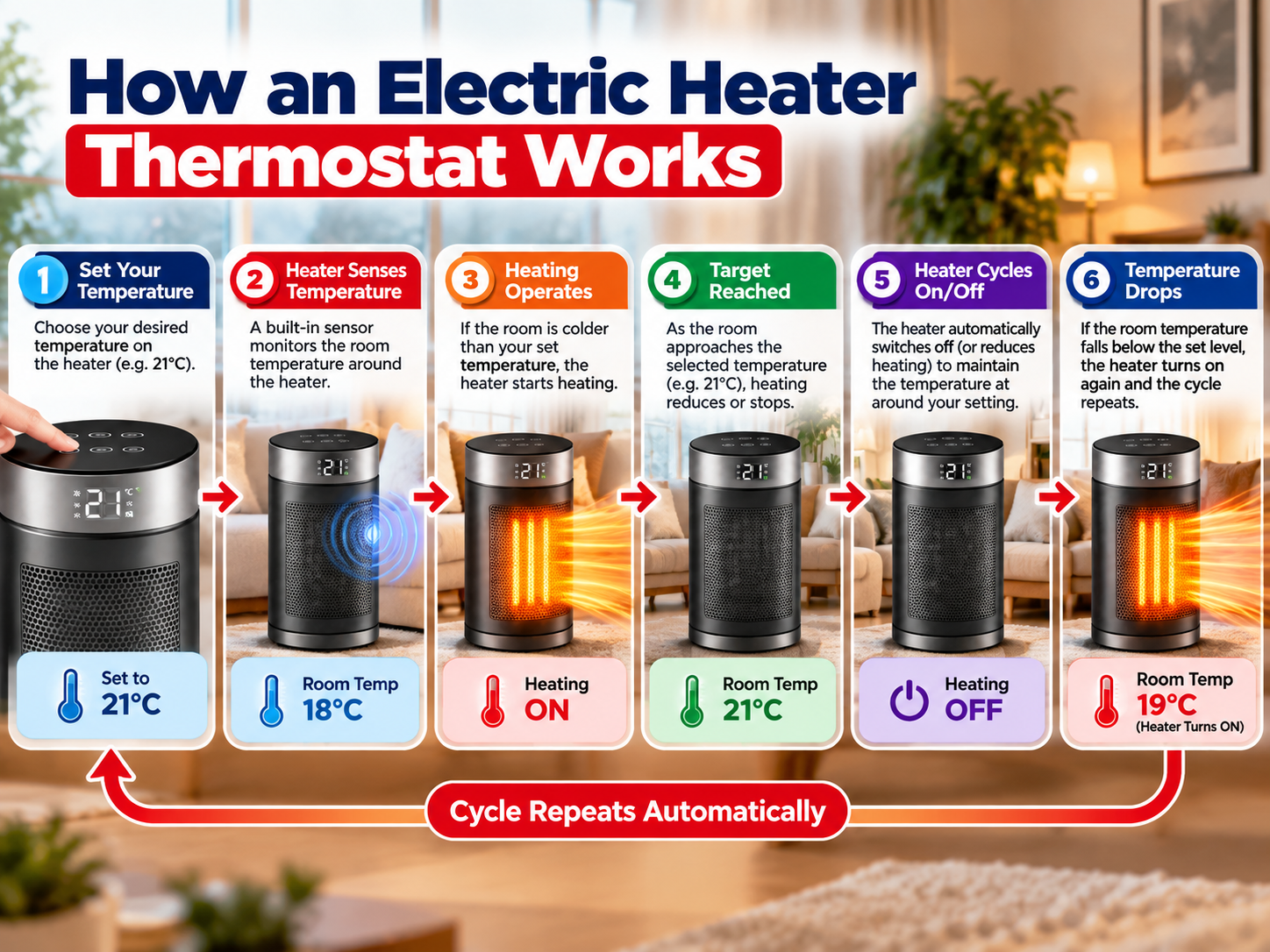
Imagine you set a digital heater to 21°C.
The heater's temperature-sensing and control system monitors conditions around the appliance.
When additional heating is required, the heating element operates according to the selected mode.
As the temperature approaches the selected setting, the appliance may stop or reduce heating according to its control logic.
If the temperature later falls sufficiently, heating may resume.
This repeated behaviour is often referred to as thermostat cycling.
However, don't assume every heater starts and stops at exactly the selected number. Sensor location, control logic and temperature tolerances differ between products.
What Does the Temperature on a Digital Heater Mean?
A digital display might allow settings such as:
18°C
20°C
22°C
24°C
These settings normally represent the temperature target used by the heater's control system.
They should not necessarily be interpreted as a laboratory-accurate measurement of the temperature everywhere in the room.
The heater measures temperature from its own sensor location.
The temperature on the opposite side of a room can differ because of:
room size
airflow
windows
draughts
insulation
heater position
ceiling height
other heat sources
A separate room thermometer can help you understand conditions away from the heater itself.
Does a Thermostat Reduce Electricity Use?
Potentially, because it can reduce the amount of time the heating element operates compared with continuous full-power heating.
Consider a 2000W heater.
If its heating element continuously operates at full rated power for one hour:
2000W = 2kW
Therefore:
2kW × 1 hour = 2kWh
But if thermostat cycling means the heating element isn't operating continuously for that whole hour, actual energy consumption can be lower.
The important distinction is:
A thermostat controls operating time; it doesn't magically reduce the heater's rated wattage.
Avoid claims such as:
“A thermostat saves 30% electricity.”
There is no universal percentage because actual consumption depends on room conditions and usage.
What Makes a Heater Cycle More Often?
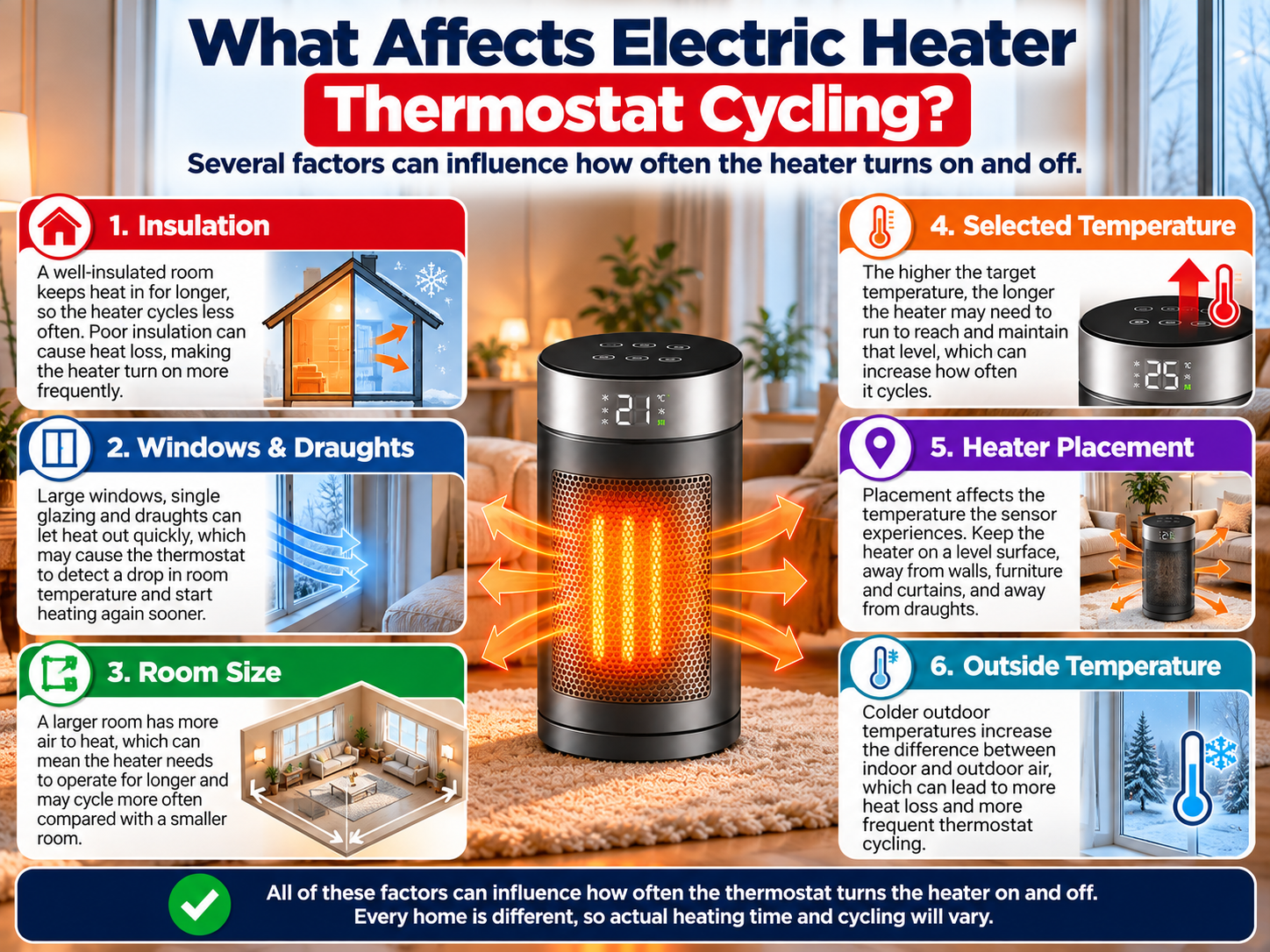
Several factors can influence how frequently heating is required.
Poor Insulation
A poorly insulated room may lose heat more quickly.
Draughts
Cold air entering around doors or windows can increase heat loss.
Large Windows
Glazing can influence how quickly a room loses heat.
Room Size
A larger volume of space may have different heating requirements.
Outside Temperature
Colder outdoor conditions can increase the difference between indoor and outdoor temperatures.
Selected Temperature
Requesting a substantially warmer room can require more heating.
Heater Position
Poor positioning can affect airflow and the temperature sensed around the appliance.
This is why thermostat performance can't be evaluated independently of the room.
Thermostat vs Heat Settings: What's the Difference?
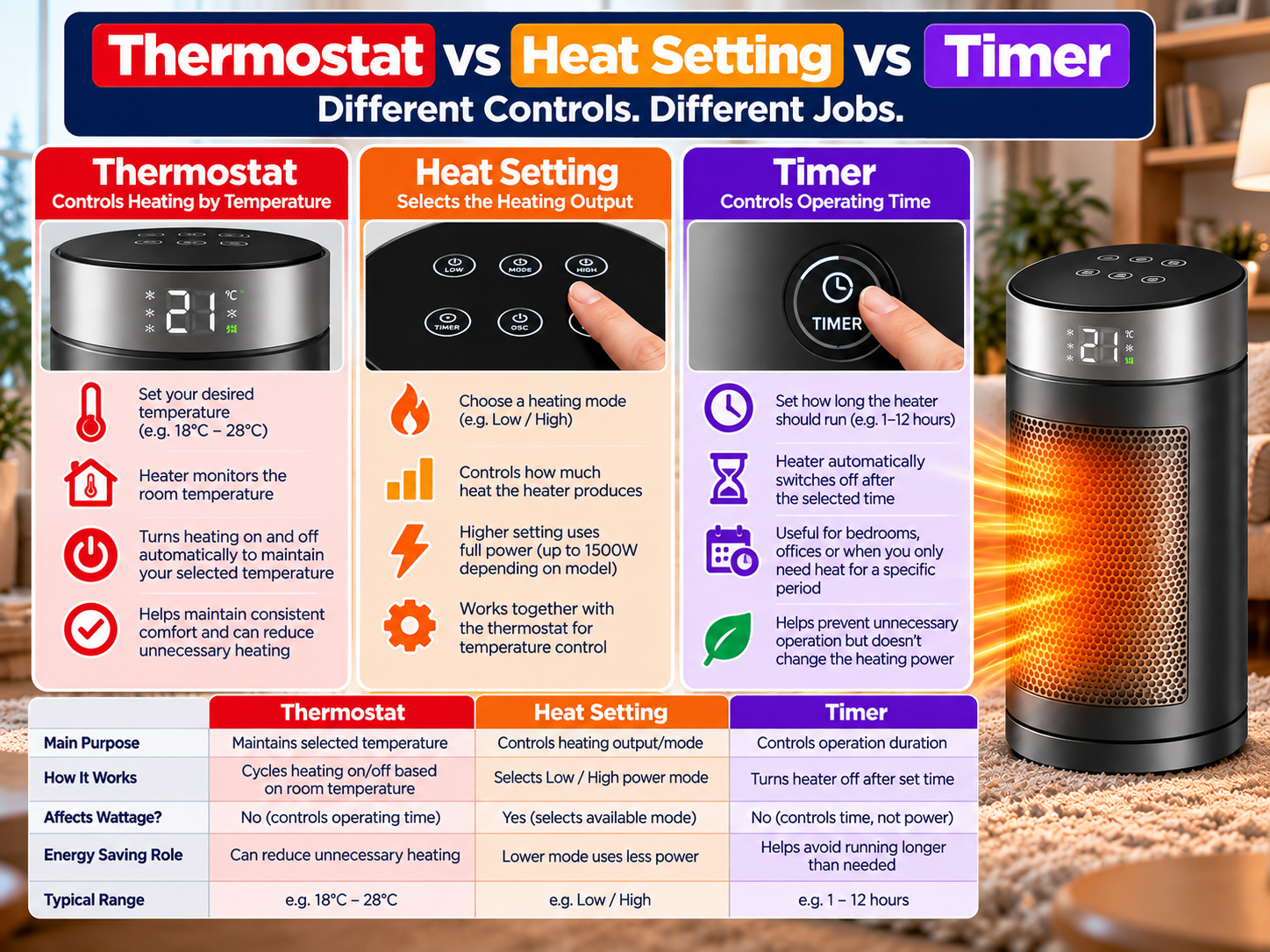
These controls perform different jobs.
Heat setting → controls heating output/mode
Thermostat → controls heating in relation to temperature
For example, a heater may offer several heat modes while also allowing you to select a target temperature.
If a lower mode genuinely uses lower electrical power, it will consume less electricity per active heating hour than the maximum-power mode.
The thermostat then determines when heating is required according to the appliance's design.
Digital Thermostat vs Manual Thermostat
Portable heaters can use different control systems.
Manual Thermostat
A basic heater may use a rotary control without displaying a precise temperature number.
You adjust the dial until the room feels comfortable, and the thermostat cycles around that setting.
Digital Thermostat
A digital model can allow you to select a numerical temperature using buttons, a control panel or remote.
Advantages can include:
clearer temperature selection
easier adjustment
visible settings
integration with timers and other controls
But a digital display doesn't automatically make one heater more economical than another.
Actual consumption still depends on wattage and operating time.
Electric Heater Thermostat and Running Cost
This is where thermostat control connects directly to the rest of our heater cluster.
Electricity cost can be estimated using:
Power (kW) × operating time × electricity unit rate
For example:
1500W = 1.5kW
2000W = 2kW
If both continuously operate at full power, the 2000W appliance consumes more electricity per hour.
However, thermostat cycling means time switched on isn't necessarily identical to time heating continuously at maximum output.
Does Setting the Thermostat Higher Heat the Room Faster?
This is an important misconception.
On a heater that uses a fixed full-power heating mode, setting a much higher target temperature doesn't necessarily increase the maximum wattage.
For example, if the selected heating mode is already operating at its maximum 2000W, changing the thermostat target from 21°C to 28°C doesn't turn it into a 3000W heater.
What the higher target may do is cause the heater to continue heating for longer before the target is reached.
The exact behaviour depends on the particular model.
What Temperature Should You Set an Electric Heater To?
There isn't one correct thermostat setting for every person or every room.
Comfort requirements vary, and certain people may require warmer environments.
For general context, Energy Saving Trust says that for most people a thermostat setting between 18°C and 21°C should be comfortable, while noting that older people, babies and people with health conditions may require higher temperatures.
Use that as general household-heating guidance rather than treating it as a mandatory setting for every portable heater.
Does Heater Position Affect the Thermostat?
It can.
Because the heater senses temperature from around the appliance, its location can influence what the sensor experiences.
Avoid positioning a portable heater:
immediately beside an open exterior door
where curtains obstruct airflow
where furniture blocks ventilation
in an unstable location
directly against combustible materials
Electrical Safety First recommends positioning portable heaters on a level surface and keeping them at least one metre away from combustible materials such as furniture, curtains and paper.
Always follow the manufacturer's placement instructions.
For safe positioning and operation, read Electrical Safety First's portable heater safety advice.
Does Insulation Help a Thermostatically Controlled Heater?
Good insulation helps a home retain heat.
If a room loses heat more slowly, the heater may need to restore lost heat less frequently than in a comparable poorly insulated environment.
This can affect how often thermostat-controlled heating operates.
Relevant factors include:
wall insulation
loft insulation
glazing
draught-proofing
doors and windows
For a deeper explanation, internally link:
What Size Electric Heater Do I Need for My Room?
Is a Thermostat the Same as a Timer?
No.
They solve different problems.
| Control | Primary purpose |
|---|---|
| Thermostat | Controls heating according to temperature |
| Timer | Controls when/how long operation occurs |
| Heat setting | Selects an available heating mode/output |
| Oscillation | Changes airflow direction |
| Remote control | Allows controls to be adjusted remotely |
A heater containing both a thermostat and timer gives you more control over temperature and operating periods.
Does a Timer Save Electricity?
A timer doesn't change the price of electricity or automatically improve heater efficiency.
It can help prevent unnecessary operation.
For example, if you only need supplementary heat for a specific period, setting an appropriate timer can help avoid accidentally leaving the heater operating longer than intended.
However, timers should never be used to bypass heater safety guidance.
Can You Leave a Thermostatic Heater Running Overnight?
A thermostat doesn't make unattended overnight use automatically safe.
Electrical Safety First advises users not to use portable heaters overnight and not to leave them unattended. It also advises against using extension leads to power portable heaters.
The presence of:
thermostat
timer
tip-over protection
or overheat protection
doesn't replace safe-use instructions.
Shopsyde 1500W Heater With Digital Thermostat
Shopsyde's 1500W Portable Electric Heater With Thermostat & Remote Control combines ceramic heating with convenient temperature controls.
Confirmed features include:
up to 1500W heating
digital thermostat
LED display
multiple heat settings
oscillation
timer
remote control
portable design
View the product:
1500W heater running cost UK
Shopsyde 2000W Heaters With Thermostat Control
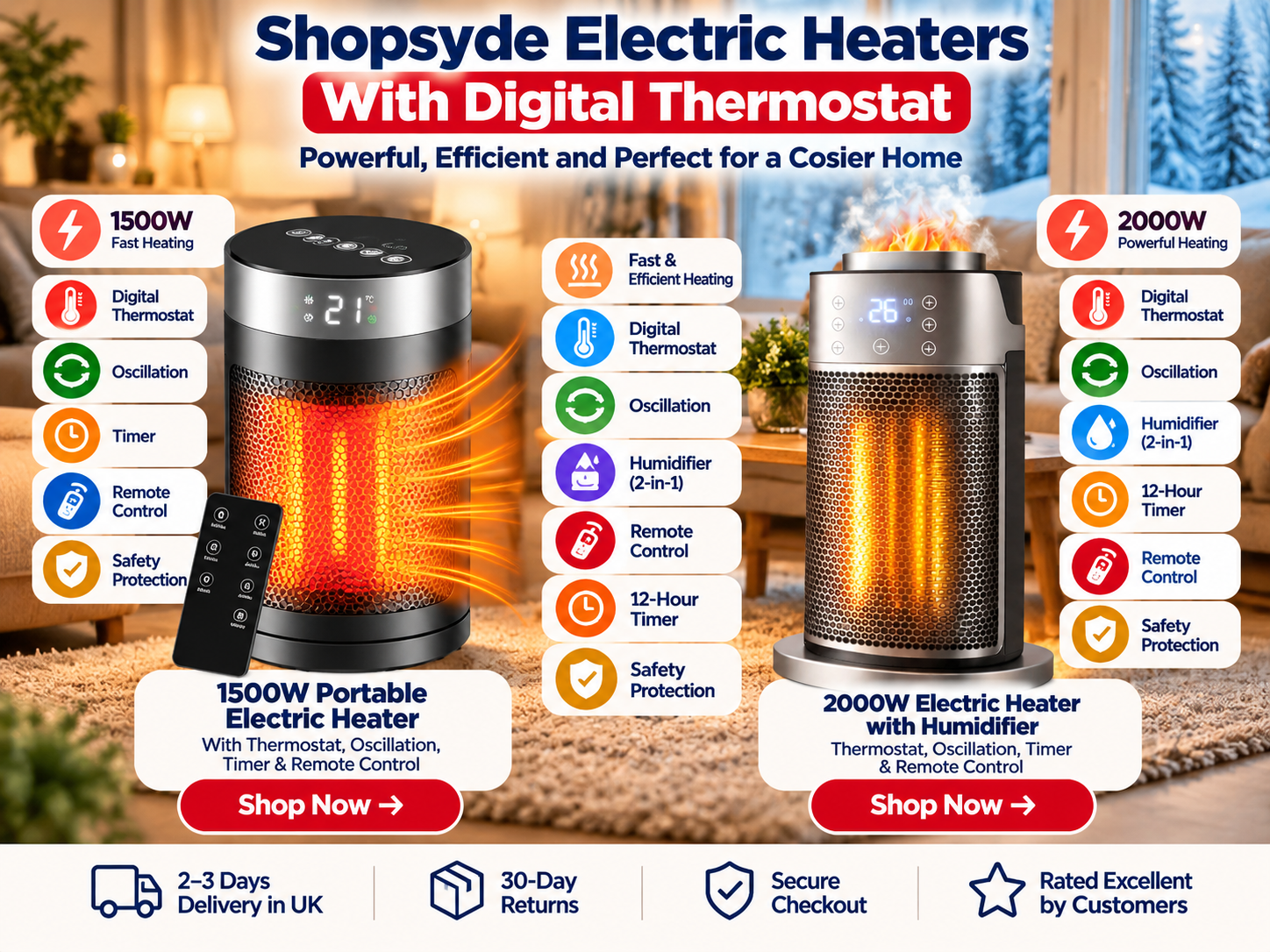
Shopsyde also offers portable 2000W electric heater options with thermostat controls.
Depending on the model, features include combinations of:
up to 2000W heating
digital thermostat
LED display
multiple heat settings
oscillation
timer
remote control
humidifier functionality on selected models
One relevant product is:
2000W Electric Heater With Humidifier: UK Buying Guide
How to Use an Electric Heater Thermostat Effectively
The objective isn't necessarily to select the highest possible temperature.
A more practical approach is:
Position the heater safely according to its instructions.
Select an appropriate heating mode.
Choose a comfortable thermostat setting.
Give the room time to respond.
Avoid repeatedly increasing the target simply because the room hasn't warmed instantly.
Reduce unnecessary heat loss where practical.
Switch the heater off when supplementary heating is no longer required.
This gives the thermostat an opportunity to perform its intended temperature-control role.
Electric Heater Thermostat Buying Checklist
When comparing portable heaters, check:
| Feature | What to look for |
|---|---|
| Thermostat type | Digital or manual |
| Temperature display | Whether numerical settings are shown |
| Temperature range | Manufacturer-specified adjustment range |
| Heat settings | Available heating modes |
| Maximum wattage | Maximum electrical power |
| Timer | Supported timer duration |
| Oscillation | Whether airflow can move side-to-side |
| Remote control | Included/compatible controls |
| Safety features | Verified product specifications |
| Display | Visibility and usability |
| Instructions | Clear operating guidance |
Don't assume two heaters with digital displays use identical thermostat technology.
The Bottom Line
An electric heater thermostat is primarily a temperature-control system.
It doesn't magically reduce the heater's rated wattage.
Instead, it can regulate how heating operates as the room approaches and moves away from the selected temperature.
When choosing a portable electric heater, consider the thermostat alongside:
wattage
heat settings
room size
insulation
timer
oscillation
safety features
and your actual heating requirements.
For thermostatically controlled portable heaters, explore:
Shopsyde Portable Electric Heaters →